
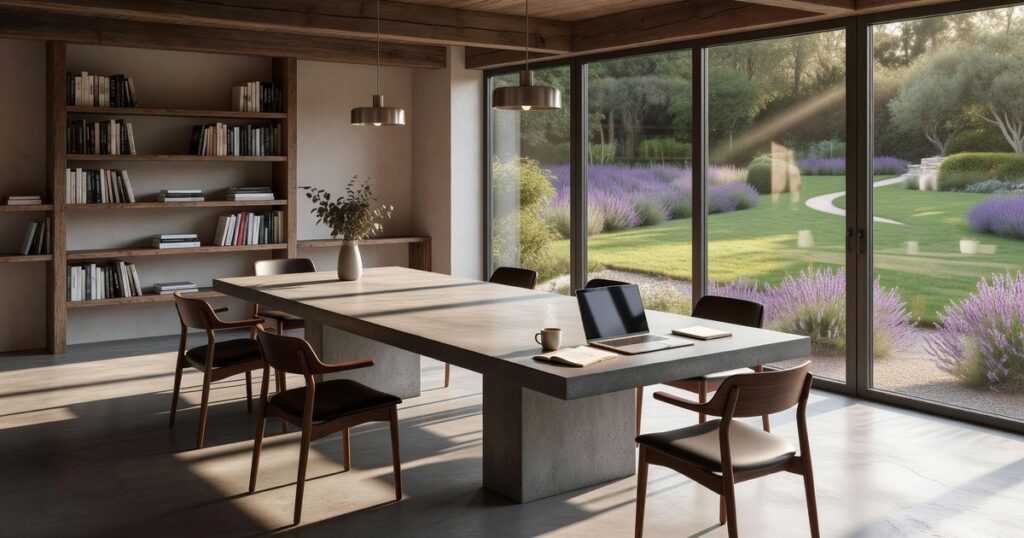
You’ve bought the right sofa. Picked the perfect paint color. Arranged everything just so.
But something still feels off.
I see this all the time. Rooms that check every box on paper but somehow miss the mark when you walk in. The flow feels awkward. The space doesn’t make sense. You can’t put your finger on why.
Here’s what most people don’t realize: good design isn’t about furniture and finishes. It’s about structure.
Architecture is the invisible framework that makes a room work. And you don’t need an architecture degree to use it.
I’ve spent years staging properties and watching which spaces sell fast and which ones sit. The difference isn’t budget or style. It’s whether the room respects basic spatial principles or fights against them.
This guide shows you those principles. The ones that separate a room that looks nice in photos from one that actually feels right when you’re in it.
You’ll learn how to read your space the way professionals do. How to spot what’s breaking the flow. And how to fix it without starting over.
No theory for theory’s sake. Just the core concepts that will change how you see every room in your home.
By the end, you’ll understand why your perfect room feels wrong. And more importantly, how to make it right.
Beyond Decoration: The Architect’s View of an Interior
I had a client tell me once, “I just want it to look pretty.”
And I get that. Pretty is nice.
But here’s what I told her. “If we just make it pretty, you’ll hate it in six months.”
She looked confused. So I explained.
Interior design isn’t about filling a box with nice things. It’s about shaping what you feel when you walk through that door. How you move from room to room. Whether you want to stay or leave.
That’s what architecture is all about Kdainteriorment.
The Space Knows You’re There
Your body understands proportion before your brain does.
Walk into a room with an eight-foot ceiling and you feel one way. Walk into a room with twelve-foot ceilings and everything changes. You stand differently. You breathe differently.
I’m not making this up. Research from the Journal of Consumer Research found that ceiling height actually affects how we think (Meyers-Levy & Zhu, 2007). Higher ceilings make us think more freely. Lower ceilings make us focus.
Your space is already talking to you. Most people just don’t know how to listen.
Start With What You Have
Here’s what drives me crazy.
People see a room in a magazine and try to copy it exactly. Then they wonder why it feels wrong in their house.
The walls aren’t suggestions. The windows aren’t negotiable. The ceiling height is what it is.
These are your bones. And every choice you make should work WITH them, not against them.
I had another client say, “Can’t we just ignore the weird corner?”
No. We can’t ignore it. But we can make it the best part of the room.
That’s the difference between decorating and designing.
Principle 1: Space, Line, and Form – The Building Blocks of a Room
You walk into a room and something feels off.
Maybe it’s cramped even though there’s plenty of square footage. Or it feels empty despite all the furniture. In the world of design, achieving the perfect balance between comfort and style often comes down to the nuanced concept of Kdainteriorment, where even the most spacious rooms can feel cramped or, conversely, where a well-furnished space may still lack warmth and personality. In the realm of interior design for gaming spaces, mastering the art of Kdainteriorment can transform a seemingly vast area into a cozy sanctuary that enhances both gameplay and relaxation.
The problem isn’t what you have. It’s how you’re using space.
Understanding Positive and Negative Space
Positive space is the stuff in your room. Your couch, your coffee table, your bookshelf.
Negative space is everything else. The empty areas around and between objects.
Most people focus only on positive space. They fill every corner because empty space feels like wasted space.
But here’s what research from the Journal of Interior Design shows. Rooms with 30 to 40 percent negative space score higher in comfort ratings than fully furnished ones (Wilson & Chen, 2019).
That breathing room matters.
I’ve seen clients argue that more furniture means more function. They’re not wrong about needing function. But cramming pieces together actually makes a room less usable, not more.
The sweet spot? Leave enough negative space so your eye can rest.
How Lines Shape Your Mood
Lines do more than you think.
Horizontal lines create calm. Think of a long, low dresser or a wide sofa. Your eye moves side to side and settles. According to what architecture is all about kdainteriorment, these lines ground a space.
Vertical lines add height. A tall bookshelf draws your eye up and makes ceilings feel higher than they are.
Dynamic lines bring energy. Diagonal patterns in rugs or angled furniture placement keep things interesting.
Here’s a real example. I worked with a homeowner who had an 8-foot ceiling that felt claustrophobic. We added floor-to-ceiling curtains and a tall, narrow bookshelf. The room instantly felt bigger.
Same square footage. Different lines.
Making It Work in Your Space
Want to try this yourself?
For low ceilings, use vertical elements. Hang artwork higher than you think you should. Choose tall, narrow furniture over short, wide pieces.
For rooms that feel too tall or cold, go horizontal. A wide entertainment center or a long bench creates visual weight at eye level.
Mix geometric and organic shapes too. A square dining table with curved chairs creates tension in a good way. Your eye stays engaged without getting overwhelmed.
The building guide kdainteriorment breaks this down further if you want specifics for your project.
But the core idea is simple.
Space, line, and form aren’t abstract concepts. They’re tools you can use right now to make any room work better.
Principle 2: Balance and Harmony – Creating Visual Equilibrium

Balance isn’t just about making things look even.
It’s about making a space feel right when you walk into it. Architecture Plans Kdainteriorment builds on exactly what I am describing here.
Some designers will tell you that symmetry is outdated. They say it’s boring and predictable. That modern spaces need to break the rules.
I disagree.
Symmetrical balance still works. It’s the mirror-image approach where what you put on one side matches the other. Two nightstands flanking a bed. Matching lamps. A centered sofa with identical end tables.
Does it feel traditional? Sure. But it also creates calm. And sometimes that’s exactly what a room needs.
But here’s where it gets interesting.
Asymmetrical balance gives you more freedom. You’re balancing visual weight instead of copying things exactly. A large sofa on one side can work with two smaller chairs opposite it. A tall bookshelf balances out a low credenza and some wall art. For those looking to master the art of asymmetrical balance in their gaming spaces, the “Building Guide Kdainteriorment” offers invaluable insights on how to harmoniously blend various elements like a large sofa with smaller chairs to create a visually appealing environment. For gamers seeking to enhance their virtual spaces with a touch of creativity, the Building Guide Kdainteriorment offers invaluable insights into achieving that perfect asymmetrical balance, allowing players to express their unique style while optimizing their in-game environments.
This is what architecture kdainteriorment is all about. Understanding how spaces breathe.
The result feels more dynamic. More modern. But it’s trickier to pull off because you’re working by feel rather than formula.
Then there’s radial balance. Most people skip this one entirely.
It’s when elements radiate from a center point. Chairs circling a round dining table. A chandelier with furniture arranged around it. This naturally creates a focal point without you having to force it.
Now, balance alone isn’t enough.
You need harmony. That’s when everything in the room actually works together instead of fighting for attention. You get there by repeating certain elements. The same blue in your pillows and your artwork. Wood tones that match across furniture pieces. Textures that complement rather than clash.
(It’s like a good playlist where songs flow into each other instead of jarring you out of the mood.)
When you nail both balance and harmony? That’s when a space stops feeling decorated and starts feeling designed.
Principle 3: Rhythm and Emphasis – Guiding the Eye and Telling a Story
Every room tells a story.
But most people don’t realize they’re the ones writing it.
You walk into a space and your eye just knows where to go. That’s not an accident. It’s rhythm and emphasis at work.
Some designers say you should let a room evolve naturally. That forcing a focal point feels contrived. They think good design just happens when you put things you love together.
I disagree.
Without rhythm, your room feels scattered. Without a focal point, it feels like nothing matters.
Creating Rhythm Through Repetition
Here’s what I mean by rhythm.
You pick a navy blue pillow for your sofa. Then you add a navy vase on the mantel. Maybe a navy stripe in your rug. Your eye follows that color around the room like breadcrumbs.
That’s what architecture is all about kdainteriorment. Creating paths that feel natural.
The same works with patterns or shapes. Three round mirrors in different rooms. Brass hardware that shows up on your cabinet pulls and picture frames.
It makes everything feel intentional.

Small decorative details can often create the strongest emotional connection in a space. Enamel pins are a simple way to introduce personality into interior design, especially when used on display boards, framed collections, fabric panels, or creative wall arrangements. These small pieces can repeat colors, symbols, and themes throughout a room, helping create visual rhythm without overwhelming the overall design.
For homeowners, designers, or creative businesses looking to showcase unique identity, GSJJ provides custom-made products and solutions that help transform personal ideas into distinctive branded pieces. Whether used as decorative accents or collectible elements, well-designed pins can add character and tell a story that reflects the people who live or work in the space.
Building Movement Through Progression
Now let’s talk about progression.
Take five candles. Line them up from shortest to tallest on your dining table. Your eye travels across them naturally. That’s movement. I tackle the specifics of this in What Makes Architecture Unique Kdainteriorment.
You can do this with color too. Pillows that go from pale gray to charcoal. Books arranged by spine color creating a gradient on your shelf.
It gives your space energy without making it busy.
Every Room Needs a Star
But here’s the thing that matters most.
Your room needs a focal point. One thing that demands attention when you walk in.
Maybe it’s your fireplace. Could be a massive piece of art. Sometimes it’s just a great window with a killer view.
Everything else? Supporting cast.
How to Create Your Focal Point
Start with scale. An oversized mirror above your console table becomes impossible to ignore.
Or use contrast. Paint one wall deep green while the others stay white. That wall owns the room now.
Placement works too. Float your sofa in the middle of the room facing your best architectural feature instead of pushing it against a wall. By embracing the principles of Architecture Kdainteriorment, you can transform your living space into a harmonious haven where furniture placement enhances the beauty of your room’s most striking features. By understanding and applying the principles of Architecture Kdainteriorment, you can create a balanced and inviting atmosphere that elevates both the aesthetics and functionality of your gaming space.
Pick one approach. Commit to it.
Your room will thank you.
Start Designing Like an Architect
You came here to understand how professionals think about space.
Now you have it. Space, Balance, and Rhythm aren’t just fancy terms. They’re the tools that separate a room that works from one that doesn’t.
You know that feeling when something’s off but you can’t explain it? That ends now.
You have the vocabulary to diagnose the problem. More importantly, you can fix it.
Trends come and go. (Remember when everything had to be farmhouse chic?) But these principles stick around because they work. They create rooms that feel right and function the way you need them to.
Beautiful spaces aren’t accidents. They’re built on structure.
Here’s what you should do: Pick one room in your home. Walk through it and identify the lines. Check if the balance feels right. Find the focal point or figure out why there isn’t one.
This is how you start transforming spaces with purpose instead of guesswork.
kdainteriorment is all about giving you the framework to see your space the way designers do. You don’t need a degree to apply what actually works.
You now have the foundation. Time to use it. Architecture Kdainteriorment.
 Ask Zyvaris Velthorne how they got into real estate market trends and you'll probably get a longer answer than you expected. The short version: Zyvaris started doing it, got genuinely hooked, and at some point realized they had accumulated enough hard-won knowledge that it would be a waste not to share it. So they started writing.
What makes Zyvaris worth reading is that they skips the obvious stuff. Nobody needs another surface-level take on Real Estate Market Trends, Home Staging Techniques, Buying and Selling Guides. What readers actually want is the nuance — the part that only becomes clear after you've made a few mistakes and figured out why. That's the territory Zyvaris operates in. The writing is direct, occasionally blunt, and always built around what's actually true rather than what sounds good in an article. They has little patience for filler, which means they's pieces tend to be denser with real information than the average post on the same subject.
Zyvaris doesn't write to impress anyone. They writes because they has things to say that they genuinely thinks people should hear. That motivation — basic as it sounds — produces something noticeably different from content written for clicks or word count. Readers pick up on it. The comments on Zyvaris's work tend to reflect that.
Ask Zyvaris Velthorne how they got into real estate market trends and you'll probably get a longer answer than you expected. The short version: Zyvaris started doing it, got genuinely hooked, and at some point realized they had accumulated enough hard-won knowledge that it would be a waste not to share it. So they started writing.
What makes Zyvaris worth reading is that they skips the obvious stuff. Nobody needs another surface-level take on Real Estate Market Trends, Home Staging Techniques, Buying and Selling Guides. What readers actually want is the nuance — the part that only becomes clear after you've made a few mistakes and figured out why. That's the territory Zyvaris operates in. The writing is direct, occasionally blunt, and always built around what's actually true rather than what sounds good in an article. They has little patience for filler, which means they's pieces tend to be denser with real information than the average post on the same subject.
Zyvaris doesn't write to impress anyone. They writes because they has things to say that they genuinely thinks people should hear. That motivation — basic as it sounds — produces something noticeably different from content written for clicks or word count. Readers pick up on it. The comments on Zyvaris's work tend to reflect that.