
5 Ways to Incorporate Historical Design Into Modern Interiors
The five simple secrets to instant timeless style are choosing enduring natural materials, leveraging intentional silhouettes, accessorizing with historical purpose, honoring authentic craftsmanship, and wearing your heritage like a crest.
Mastering these foundational principles guarantees a wardrobe that transcends seasonal trends and communicates enduring visual authority.
Imagine a great hall at dusk where torchlight catches the dense nap of a velvet surcoat. A heavy wool cloak pools elegantly behind its wearer, and a knight’s livery badge announces allegiance before a single word is spoken.
This scene functions as both atmosphere and argument that this is what intentional dressing looked like before fashion became an endless cycle. Timeless style is not a trend that recurs, but rather a lasting philosophy.
It rests on pillars that medieval and Renaissance artisans understood intuitively, including purposeful materials, deliberate silhouette, and design that communicates something genuine. Medieval craftsmen built garments to outlast seasons, sieges, and social shifts.
The philosophy behind that construction is a standard that modern fashion rarely attempts and rarely achieves. The following five secrets are historical lessons reawakened rather than nostalgic costuming advice.
1. Choose Materials That Age Like a Legend
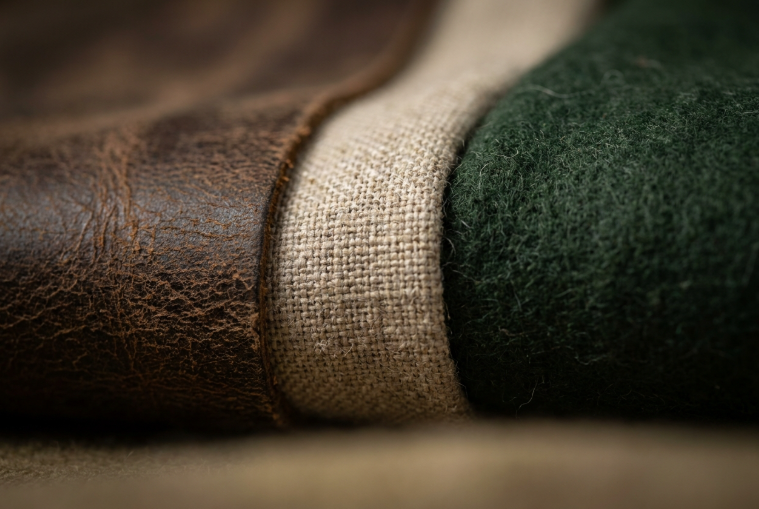
Medieval craftsmen selected materials like heavy wool, breathable linen, sturdy leather, and rich silk based on endurance and tactile richness. A nobleman’s traveling cloak was systematically built to outlast harsh seasons.
Similarly, a merchant’s leather belt was expected to soften, adapt, and strengthen with years of rigorous use. In historical clothing, material quality was not considered a luxury, but rather the baseline standard of practice.
Natural materials are the bedrock of timeless style because they change gracefully. They develop a unique patina over time and carry the distinct evidence of a life lived in them.
When curating a heritage-inspired environment, integrating authentic material qualities is essential to ground the aesthetic. For instance, adding Medieval Collectibles’ decorative medieval armor to a living space instantly establishes a powerful historical atmosphere.
Consider the sensory weight of a wool cloak, the rich grain of genuine leather, or the textured hand of a densely woven linen tunic. These tactile indicators reveal whether a piece will outlast a season or simply take up space in a closet.
For Renaissance faire attendees and cosplayers, material quality reads entirely differently on stage and in daylight than its synthetic counterparts. Selecting authentic materials is an uncompromised professional standard that proves timeless style begins with the very threads from which it is woven.
| Key Insight: Unlike synthetics that fray and pill, natural materials like wool and leather gain character. Their patina isn’t just wear; it is a visual history that adds value as the garment ages. |

2. Let Silhouette Do the Storytelling
Medieval and Renaissance clothing achieved its striking drama through definitive lines rather than volume alone. A flowing linen tunic communicated ease, movement, and occasion.
A highly structured leather doublet announced rank, readiness, and martial capability. Each historical silhouette functioned as a declarative sentence about its wearer before a single introduction was made.
Timeless style is neither about chaotic maximalism nor stark minimalism, as it is fundamentally about intentional shape. Garments should possess a clear, purposeful visual relationship to both the body and the occasion they serve.
In this tradition of historical clothing, layering is never merely a practical solution for warmth. It is a structural and narrative tool that builds classic elegance.
Approach layering the way a medieval wardrobe builder would, where each sequential layer adds depth and dimension rather than cumbersome bulk. A cloak worn open over a fitted base creates a powerful presence and a silhouette contrast that no single garment could ever achieve on its own.
This principle holds immense power whether the setting is a cosplay stage, a high-stakes theatrical production, or a curated heritage lifestyle event. Ultimately, the silhouette does the storytelling to craft an introduction of pure heritage design without a word.

3. Accessorize With Purpose, Not Abundance
In the medieval world, accessories were never purely decorative afterthoughts. Heavy signet rings bore family seals and served as legally binding signatures. Thick leather belts carried essential tools, practical pouches, and weaponry directly on the body.
Every piece had a definitive reason to exist beyond its aesthetic appearance, and that inherent utility gave the object its undeniable authority.
Purposeful accessorizing elevates any ensemble far above the merely assembled by choosing pieces equipped with history. The ultimate goal of medieval accessories is not abundance, but intention.
Choosing one or two pieces that firmly anchor a look is vastly superior to allowing multiple cheap elements to compete within it. Identify the accessories with the most visual and symbolic authority in any collection and allow those pieces to lead the aesthetic.
This philosophy of intentional objects does not stop at the edge of the wardrobe. For readers building a heritage aesthetic across their personal presentation and physical spaces, the same principle extends directly into the room itself.
Objects should carry the same intentional authority in a room as a well-chosen accessory carries on a person. Resources like heritage craft communities offer incredible additional depth for readers drawn to the rich philosophy behind purposeful historical objects.
| Pro Tip: When selecting accessories, ask if the item has a “job.” Whether it’s a brooch that secures a cloak or a signet ring for sealing wax, utility creates an aura of authenticity. |
4. Honor Craft Over Trend
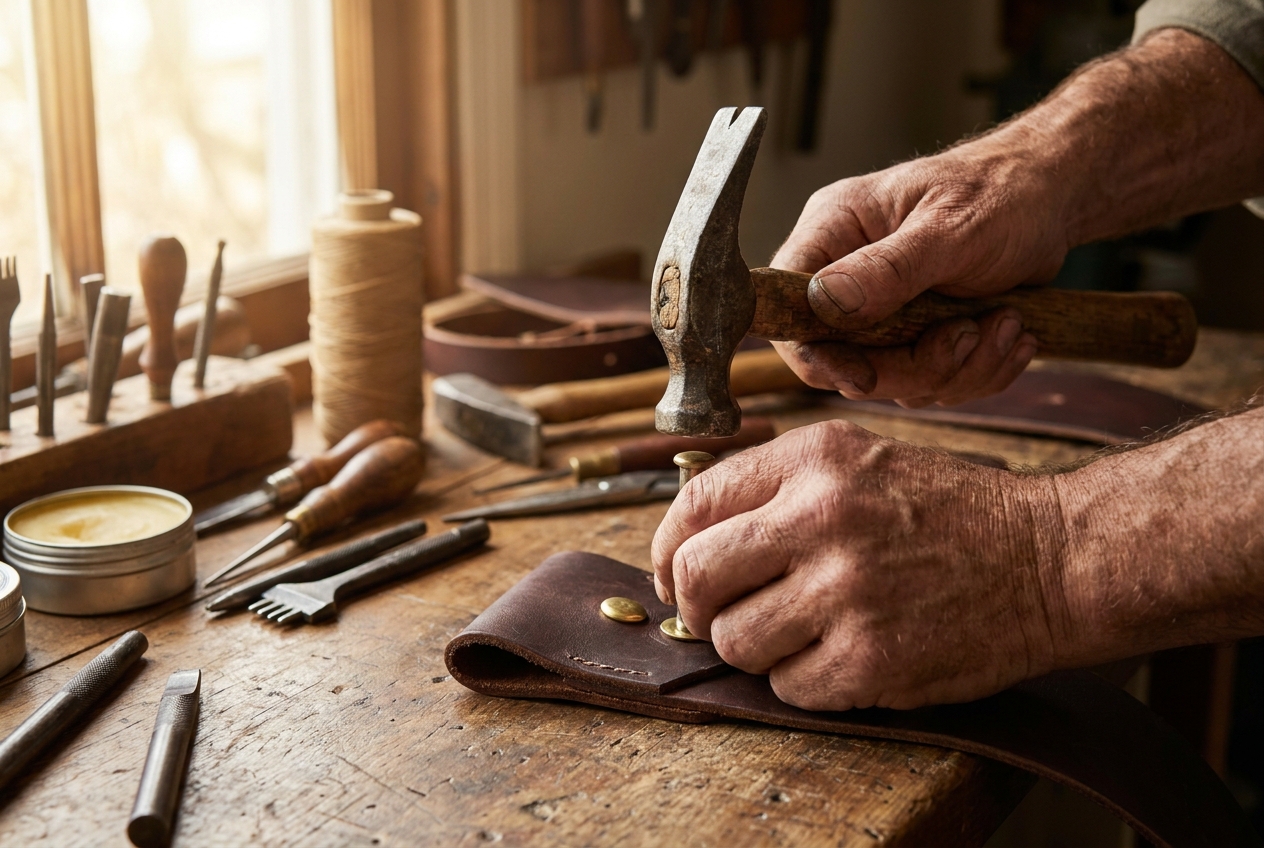
Medieval craft guilds enforced rigorous quality guidelines as a civic and moral standard rather than merely as a commercial necessity. A tailor or leatherworker who produced inferior goods risked their reputation and their esteemed standing within the local community.
Historical records show that guild documents strictly enforced rules regarding manufacturing quality. Authentic craftsmanship was accountability made visible in every seam, rivet, and line of stitching.
Timeless style actively resists the frantic pull of seasonal trends by investing exclusively in pieces built with deep expertise. When construction details and heavy hardware selection reflect deliberate care, the result is heritage design that endures.
These pieces do not just last longer physically. They read completely differently to the discerning eye.
To master this, one must learn to evaluate garments and accessories the way a historian reads artifacts. Look closely for reinforced stitching at high-stress points, fully functional closures, and hand-finished leather edges rather than machine-rolled shortcuts.
These specific details distinguish construction built to endure from construction built merely to appear historically accurate. Battle-ready construction is simply another name for what timeless quality has always meant.
5. Wear Your Heritage Like a Crest
In medieval Europe, heraldic symbols, specific livery colors, and distinct garment details were personal identity made entirely visible. A knight’s vibrant surcoat announced his house and lineage long before his face could be seen through a helm.
A lady’s intricately embroidered device on a flowing sleeve was both a signature and a bold statement of belonging. Style within this historical tradition was never neutral, as it always communicated something deeply specific about who was wearing it.
Timeless style must always possess a distinct point of view. Whether that perspective is drawn from deep cultural heritage or an aesthetic lineage cultivated over years, a style that genuinely endures always communicates something true.
The garment is the declaration, while the wearer is the active author. Building an aesthetic around these authentic choices guarantees a lasting visual impact.
To implement this philosophy, identify the historical thread that speaks to you most powerfully. It might be the austere beauty of early medieval simplicity or the practical elegance of traveling merchant culture.
Build your style identity outward from that single authentic thread rather than haphazardly assembling looks from whatever happens to be available. Integrating meaningful medieval accessories and historically resonant layers communicates a specific narrative about your profound sense of history.
| Important: Avoid treating historical style as a costume. If you don’t connect personally with the symbols or era you choose, the look will feel hollow. Authenticity requires a genuine, researched connection to your aesthetic. |

The Bottom Line
Great style is built entirely on intentional choices made with knowledge, patience, and unwavering conviction.
The five secrets detailed above are not rigid rules to be memorized. Rather, they represent a single philosophy expressed in five different ways. They teach us that what truly endures is always purposeful and honest in its construction.
Medieval and Renaissance artisans did not produce beautiful objects by mere accident. They developed a profound philosophy of enduring beauty that took the physical form of heavy wool cloaks, structured leather doublets, and expertly forged pendants.
That exact philosophy remains entirely available today to anyone willing to look past fleeting modern trends. Cultivating a heritage-inspired aesthetic is an ongoing practice that deepens with every intentional sartorial choice you make.
For those ready to build from this historic foundation, the past offers a long and incredibly generous record to draw upon. Step back into that torchlit great hall as someone who fully belongs there.
Wear history not as a costume, but as a timeless continuation of craft and character. Making these historical principles your own is the ultimate secret to lasting personal style.
| Author Profile: Medieval Collectibles is the leading online retailer of authentic medieval replicas and fantasy collectibles for history enthusiasts, reenactors, and collectors worldwide. |
 Scotty Cregerons writes the kind of buying and selling guides content that people actually send to each other. Not because it's flashy or controversial, but because it's the sort of thing where you read it and immediately think of three people who need to see it. Scotty has a talent for identifying the questions that a lot of people have but haven't quite figured out how to articulate yet — and then answering them properly.
They covers a lot of ground: Buying and Selling Guides, Real Estate Market Trends, Expert Insights, and plenty of adjacent territory that doesn't always get treated with the same seriousness. The consistency across all of it is a certain kind of respect for the reader. Scotty doesn't assume people are stupid, and they doesn't assume they know everything either. They writes for someone who is genuinely trying to figure something out — because that's usually who's actually reading. That assumption shapes everything from how they structures an explanation to how much background they includes before getting to the point.
Beyond the practical stuff, there's something in Scotty's writing that reflects a real investment in the subject — not performed enthusiasm, but the kind of sustained interest that produces insight over time. They has been paying attention to buying and selling guides long enough that they notices things a more casual observer would miss. That depth shows up in the work in ways that are hard to fake.
Scotty Cregerons writes the kind of buying and selling guides content that people actually send to each other. Not because it's flashy or controversial, but because it's the sort of thing where you read it and immediately think of three people who need to see it. Scotty has a talent for identifying the questions that a lot of people have but haven't quite figured out how to articulate yet — and then answering them properly.
They covers a lot of ground: Buying and Selling Guides, Real Estate Market Trends, Expert Insights, and plenty of adjacent territory that doesn't always get treated with the same seriousness. The consistency across all of it is a certain kind of respect for the reader. Scotty doesn't assume people are stupid, and they doesn't assume they know everything either. They writes for someone who is genuinely trying to figure something out — because that's usually who's actually reading. That assumption shapes everything from how they structures an explanation to how much background they includes before getting to the point.
Beyond the practical stuff, there's something in Scotty's writing that reflects a real investment in the subject — not performed enthusiasm, but the kind of sustained interest that produces insight over time. They has been paying attention to buying and selling guides long enough that they notices things a more casual observer would miss. That depth shows up in the work in ways that are hard to fake.