Inspecting the inside of a pipe is rarely as simple as looking at the outside. Pipes can run behind walls, beneath floors, inside machinery, or through areas where direct access is impossible. Even when an opening is available, it may be too narrow for a person to see what is happening inside. This is where a dual lens borescope can make a noticeable difference by giving users a clearer view of hard-to-reach areas from different angles.
Instead of relying on a single camera at the end of a flexible probe, a dual-lens model can provide forward-facing and side-facing views. This makes it easier to examine the pipe wall, identify obstructions, and understand what is happening around bends without repeatedly repositioning the equipment.
Why Pipe Inspection Can Be Difficult
Pipes are designed to transport water, air, gas, chemicals, or other materials, but their enclosed design makes maintenance challenging. A problem may develop several meters away from the nearest access point, leaving very little information available from an external inspection.
Common issues include:
- Cracks and small fractures
- Corrosion and rust
- Mineral deposits
- Grease and dirt buildup
- Blockages and foreign objects
- Damaged joints
- Leaks
- Root intrusion in underground drainage systems
- Deformation or damage caused by pressure
Traditionally, finding these problems could require removing sections of pipe or opening walls and floors. Apart from taking time, this approach can increase repair costs and create additional work.
A camera inspection allows technicians to investigate the problem before deciding what needs to be repaired.
What Makes a Dual-Lens Borescope Different?
A conventional inspection camera usually has one lens positioned at the end of the probe. The user moves the probe through the pipe and watches the live image on the display. This works well in many situations, but the camera’s field of view is still limited.
A dual-lens borescope adds another perspective. Depending on the design, one camera may face directly forward while another provides a side or angled view. The operator can switch between the cameras or use the available views to examine different parts of the inspection area.
This is particularly useful when the pipe contains bends, fittings, joints, or irregular surfaces. Instead of constantly twisting the probe to find the right angle, the operator can inspect more of the surrounding area from the same position.
Better Visibility Around Pipe Bends
Bends are one of the most frustrating parts of pipe inspection. When a single camera travels around a bend, the lens may point toward one section of the pipe while leaving another section outside the field of view.
For example, imagine inspecting a pipe that turns 90 degrees. The forward-facing camera may show the path ahead, but it may not provide a useful view of the nearby pipe wall. A second lens can help the technician inspect that area without having to pull the probe back and repeatedly change its position.
This can save time during inspections, especially when working with long or complicated pipe systems.
Finding Problems Before Starting Repairs
One of the biggest advantages of camera-based inspection is that it can help technicians understand the problem before beginning physical work.
Suppose a drain is blocked, but the location of the blockage is unknown. Removing pipe sections without knowing where the problem is can turn a simple repair into a much larger job.
With a camera, the technician can gradually move through the pipe and look for the source of the obstruction. The inspection may reveal accumulated debris, a damaged section, or another object preventing normal flow.
The same principle applies to suspected leaks. While a camera does not replace every type of leak-detection method, it can provide useful visual information about the internal condition of the pipe.
A Useful Borescope for Pipe Inspection
Choosing the right borescope for pipe inspection depends on the type of work being performed. A small household drain and a large industrial pipeline do not necessarily require the same equipment.
Before selecting a model, consider the diameter of the pipes being inspected. The probe needs to be narrow enough to enter the pipe while remaining durable enough to handle the environment. A flexible probe is also helpful when navigating bends and tight sections.
Another important consideration is probe length. A short probe may be suitable for vehicle components or household plumbing, while longer pipes may require a much longer cable.
Image quality is equally important. A blurry or poorly illuminated image can make small cracks, corrosion, or deposits difficult to identify. A camera with adjustable lighting can be particularly useful because the inside of a pipe is normally dark.
Lighting Makes a Major Difference
Even a high-resolution camera will struggle to produce a useful image without sufficient lighting. Pipes can be completely dark, and their surfaces may absorb or reflect light in different ways.
Inspection cameras commonly use small LED lights around the camera lens. Adjustable brightness allows the operator to increase illumination when looking into a dark section and reduce it when reflective surfaces cause glare.
This is another area where practical design matters. The goal isn’t simply to produce a bright image but to produce an image where important details can actually be seen.
Recording and Documenting Inspections
Modern inspection cameras can do more than provide a live view. Many models allow users to capture photographs or record video during an inspection.
This can be valuable for professional maintenance teams. Instead of simply telling a customer that a pipe has corrosion or an obstruction, a technician can provide visual evidence of the condition.
Recorded inspections can also be useful for:
- Comparing pipe conditions over time
- Keeping maintenance records
- Explaining repair requirements
- Identifying recurring problems
- Sharing findings with another technician
- Documenting work for property owners
For larger maintenance operations, keeping these records can make future inspections easier because technicians have something to compare against.
Useful Beyond Plumbing
Although pipe inspection is an obvious application, dual-camera inspection equipment can be useful in many other areas.
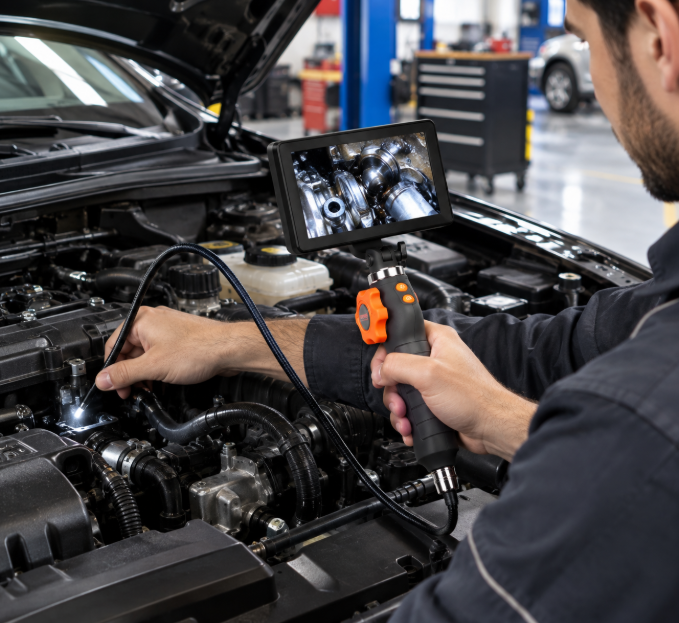
Automotive technicians can use inspection cameras to examine areas around engines and other components that are difficult to access. Maintenance workers may use them to look inside machinery, ventilation systems, ducts, or structural cavities.
In industrial environments, an inspection camera can reduce the need to dismantle equipment simply to get a visual look at an internal component.
The common advantage is accessibility. Wherever a flexible camera can reach a space that a person’s eyes cannot, an inspection camera can provide useful information.
Tips for Getting Better Inspection Results
Having the right equipment is only part of the job. How the camera is used can also affect the quality of the inspection.
Move the probe slowly rather than pushing it quickly through the pipe. Slow movements give the camera more time to capture details and make it easier to recognize changes in the pipe surface.
Keep an eye on the orientation of the camera as well. Knowing which direction the lens is facing helps technicians understand where a defect is located.
It is also worth recording important sections rather than relying entirely on memory. A small crack or unusual deposit may look insignificant during the initial inspection but become important when the entire condition of the pipe is reviewed later.
After finishing the inspection, clean the probe according to the manufacturer’s instructions. This is especially important when the camera has been exposed to dirty water, grease, chemicals, or other contaminants.
Making Pipe Maintenance More Efficient
The real value of an inspection camera is not simply the image it produces. It is the information that image provides before repair work begins.
When technicians know where a problem is located and have a better idea of what caused it, they can approach the repair more efficiently. In some cases, this can mean opening a smaller section of a wall or floor instead of carrying out unnecessary dismantling.
For maintenance teams, this can translate into less diagnostic time and better planning. For property owners, it can make it easier to understand why a repair is required.
Choosing the Right Camera for the Job
There is no single inspection camera that is ideal for every application. Users should consider the pipe diameter, inspection distance, probe flexibility, camera resolution, lighting, viewing angle, and recording capabilities before making a choice.
A dual-camera design can be particularly helpful when inspecting pipes with multiple bends or areas where viewing the surrounding walls is just as important as seeing what lies directly ahead.
The most useful equipment is ultimately the one that provides clear images, reaches the required areas, and is practical enough to use during real maintenance work.
Final Thoughts
Pipe problems are often hidden from view, which is why diagnosing them can take more time than repairing them. A dual-lens inspection system provides technicians with additional viewing angles and can make it easier to examine bends, walls, joints, and other difficult areas without immediately dismantling the pipe.
When combined with suitable lighting, a flexible probe, good image quality, and recording capabilities, it becomes a practical tool for both routine maintenance and troubleshooting. For professionals and DIY users alike, a reliable pipe inspection camera can turn an otherwise inaccessible internal space into something that can be examined, documented, and understood before repair work begins.
 Jodithina Krueger is the kind of writer who genuinely cannot publish something without checking it twice. Maybe three times. They came to real estate market trends through years of hands-on work rather than theory, which means the things they writes about — Real Estate Market Trends, Home Staging Techniques, Property Investment Strategies, among other areas — are things they has actually tested, questioned, and revised opinions on more than once.
That shows in the work. Jodithina's pieces tend to go a level deeper than most. Not in a way that becomes unreadable, but in a way that makes you realize you'd been missing something important. They has a habit of finding the detail that everybody else glosses over and making it the center of the story — which sounds simple, but takes a rare combination of curiosity and patience to pull off consistently. The writing never feels rushed. It feels like someone who sat with the subject long enough to actually understand it.
Outside of specific topics, what Jodithina cares about most is whether the reader walks away with something useful. Not impressed. Not entertained. Useful. That's a harder bar to clear than it sounds, and they clears it more often than not — which is why readers tend to remember Jodithina's articles long after they've forgotten the headline.
Jodithina Krueger is the kind of writer who genuinely cannot publish something without checking it twice. Maybe three times. They came to real estate market trends through years of hands-on work rather than theory, which means the things they writes about — Real Estate Market Trends, Home Staging Techniques, Property Investment Strategies, among other areas — are things they has actually tested, questioned, and revised opinions on more than once.
That shows in the work. Jodithina's pieces tend to go a level deeper than most. Not in a way that becomes unreadable, but in a way that makes you realize you'd been missing something important. They has a habit of finding the detail that everybody else glosses over and making it the center of the story — which sounds simple, but takes a rare combination of curiosity and patience to pull off consistently. The writing never feels rushed. It feels like someone who sat with the subject long enough to actually understand it.
Outside of specific topics, what Jodithina cares about most is whether the reader walks away with something useful. Not impressed. Not entertained. Useful. That's a harder bar to clear than it sounds, and they clears it more often than not — which is why readers tend to remember Jodithina's articles long after they've forgotten the headline.