
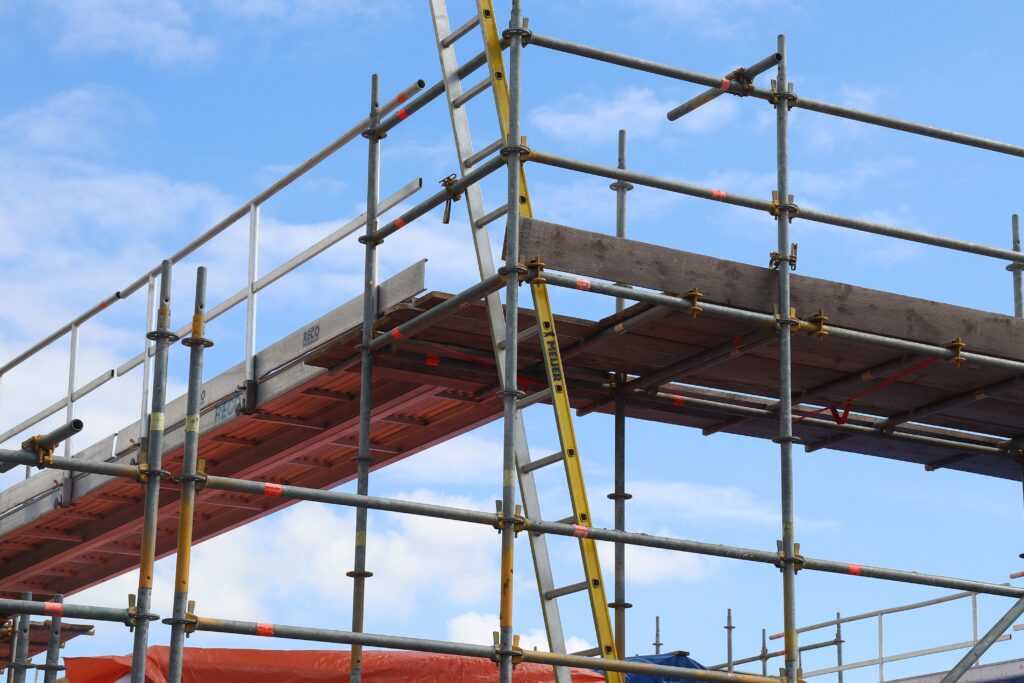
When a building construction intends to move from ground-up, the site rarely gives you the luxury of perfect access conditions. Access changes, trades overlap, weather shifts, and a schedule that looked comfortable on paper can suddenly feel tight. What matters is how well the temporary works respond to those realities. Good scaffolding is therefore more than something workers climb. It is part of the project strategy—quietly supporting productivity while making difficult work safer and more controlled.
1. Let the Building Dictate the Right Scaffolding System
A straightforward rectangular building and a complex commercial façade should never be approached as though they present the same scaffolding problem. The geometry, height and access requirements can change what is practical.
For example, a building with curved walls, awkward corners or irregular elevations, access during construction becomes a challenge. For such a site, professionals in scaffolding hire in Auckland will provide a scaffolding solution like tube-and-coupler scaffolding for unique access versatility, customization capabilities, and high load strength. That offers the flexibility needed to work around such difficult shapes.
On a tall project where repetition and rapid assembly matter, pre-engineered modular system scaffolding provides a more efficient solution.
The important point is not simply choosing a familiar system. It is matching the system to the structure:
- Complex geometry may favor adaptable components.
- Tall, repetitive elevations can benefit from modular assembly.
- Structural calculations should establish stability and load requirements.
- Competent scaffolders must translate the design into a correctly erected structure.
That combination of engineering judgment and practical experience is where a reliable solution begins.
2. Match the Scaffold to the Work Being Done
Aligning the scaffolding solution with the nature of the intended assignment is a core factor in enhancing structural safety and site efficiency. On the other hand, if an overly complex system is used for a simple job, it can lead to unnecessary costs and time loss.
Picture two sites. On one, painters need stable platforms and room for hand tools, while the other platform supports masonry, plastering materials and heavier equipment.
Light-duty scaffolding can suit inspection, painting and other relatively low-load activities. Heavy-duty arrangements are better suited to construction work where materials and multiple workers impose substantially greater loads.
Rather than selecting capacity from habit, consider:
- The number of workers using each platform
- Tools and materials stored temporarily
- Platform dimensions and loading arrangements
- The safe working load specified for the system.
A competent HSE professional and scaffolding specialist like Orange Scaffolding can help verify that the working platforms, standards and supporting components remain within their intended limits. This is where technical precision becomes practical protection.
3. Treat the Site as Part of the Engineering Problem
A technically excellent scaffold can still become a poor solution if the ground, weather or surrounding environment has been ignored. A soft surface, sloping access route, exposed waterfront position or busy public area can fundamentally change the requirements.
On constrained sites, cantilevered, overhead, or specialized access setups may make more sense where ground-level support is impractical. For work that moves between locations on a stable, level surface, mobile or tower scaffolding can offer useful flexibility.
For a more demanding site, the planning may involve:
- Assessing ground bearing conditions before installing supports
- Selecting appropriate sole boards and foundations
- Accounting for wind exposure and weather
- Protecting workers and the public around the scaffold.
This is why experienced providers do more than deliver equipment. They listen to the site team, understand the working environment and develop a setup around the actual conditions rather than an idealized drawing.
4. Consider the Whole Project, Not Just the Hire Price
A cheaper scaffold is not necessarily the cheaper choice. If assembly takes longer, access is awkward, trades lose productive hours or the system has to be repeatedly modified, the apparent saving can disappear quickly.
For a smaller, conventional building, frame scaffolding may offer a straightforward and economical arrangement. On a larger commercial development, a system scaffold may justify a higher initial investment through faster assembly, greater adaptability and more efficient workflow.
The better commercial question is therefore: What solution gives the project the safest usable access with the least disruption? That helps guide the team to pick a setup that stops falls and injuries while letting other work go on with few delay
If you are comparing options for scaffolding hire in Auckland, specialist advice can help establish what the project actually requires before equipment is committed.
In essence, for the construction industry, scaffolding is a critical part of construction integrity and a key alternative to ladders for workers. It is an investment that touches four core areas of any project: Safety, Cost, Time, and Legal Risks. That’s why partnering with a reliable scaffolding expert offering hire or rental services is crucial; it’s about gaining valuable scaffolding insights and achieving the best structural and cost alignment.
 Ask Zyvaris Velthorne how they got into real estate market trends and you'll probably get a longer answer than you expected. The short version: Zyvaris started doing it, got genuinely hooked, and at some point realized they had accumulated enough hard-won knowledge that it would be a waste not to share it. So they started writing.
What makes Zyvaris worth reading is that they skips the obvious stuff. Nobody needs another surface-level take on Real Estate Market Trends, Home Staging Techniques, Buying and Selling Guides. What readers actually want is the nuance — the part that only becomes clear after you've made a few mistakes and figured out why. That's the territory Zyvaris operates in. The writing is direct, occasionally blunt, and always built around what's actually true rather than what sounds good in an article. They has little patience for filler, which means they's pieces tend to be denser with real information than the average post on the same subject.
Zyvaris doesn't write to impress anyone. They writes because they has things to say that they genuinely thinks people should hear. That motivation — basic as it sounds — produces something noticeably different from content written for clicks or word count. Readers pick up on it. The comments on Zyvaris's work tend to reflect that.
Ask Zyvaris Velthorne how they got into real estate market trends and you'll probably get a longer answer than you expected. The short version: Zyvaris started doing it, got genuinely hooked, and at some point realized they had accumulated enough hard-won knowledge that it would be a waste not to share it. So they started writing.
What makes Zyvaris worth reading is that they skips the obvious stuff. Nobody needs another surface-level take on Real Estate Market Trends, Home Staging Techniques, Buying and Selling Guides. What readers actually want is the nuance — the part that only becomes clear after you've made a few mistakes and figured out why. That's the territory Zyvaris operates in. The writing is direct, occasionally blunt, and always built around what's actually true rather than what sounds good in an article. They has little patience for filler, which means they's pieces tend to be denser with real information than the average post on the same subject.
Zyvaris doesn't write to impress anyone. They writes because they has things to say that they genuinely thinks people should hear. That motivation — basic as it sounds — produces something noticeably different from content written for clicks or word count. Readers pick up on it. The comments on Zyvaris's work tend to reflect that.