
4 Practical Ways to Maximize Small Living Rooms
Double your small living room’s perceived size by matching furniture to the room’s scale, integrating hidden storage to eliminate visual clutter, creating flexible seating zones, and layering texture-rich, washable fabrics.
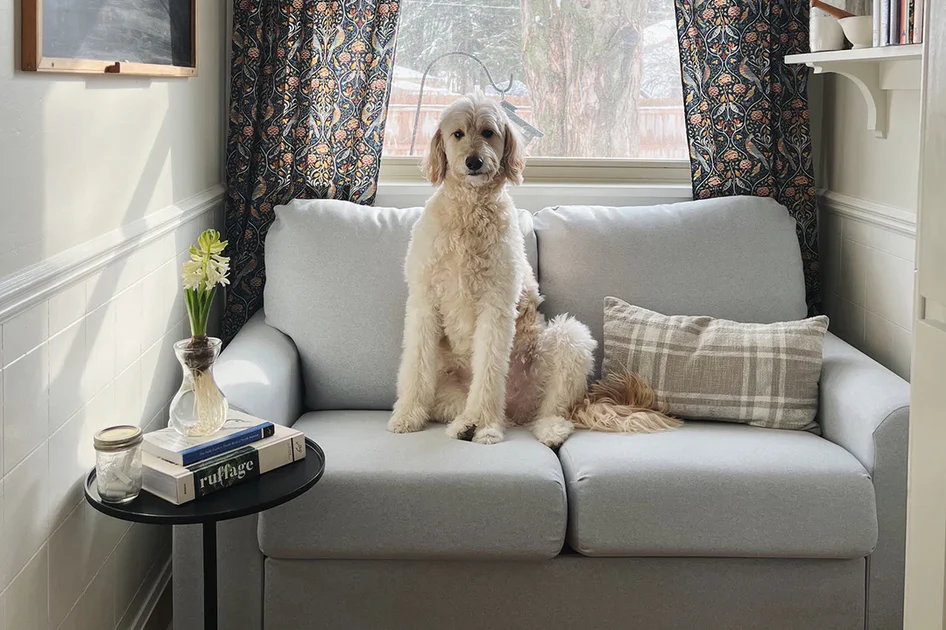
It is the end of a long day, and your living area is holding the physical weight of everything that has happened since morning. There are shoes scattered near the entryway, a child’s forgotten toy abandoned in the corner, and a pet comfortably settled on the only available cushion.
The tension that most of us feel in compact homes is universal, as we desperately want the room to be beautiful yet absolutely need it to work for daily life. Usually, it feels like we are forced to choose between the two.
But small spaces are not a design problem waiting to be permanently solved. They are simply a story waiting to be told with the right pieces placed in the right ways.
The tricks to expanding your space do not require knocking down walls, hiring contractors, or living like an extreme minimalist. Instead, they rely on strategic, nearly effortless adjustments to how a room functions, shifting the atmosphere from cramped to open.
1. Let Furniture Match the Room Scale
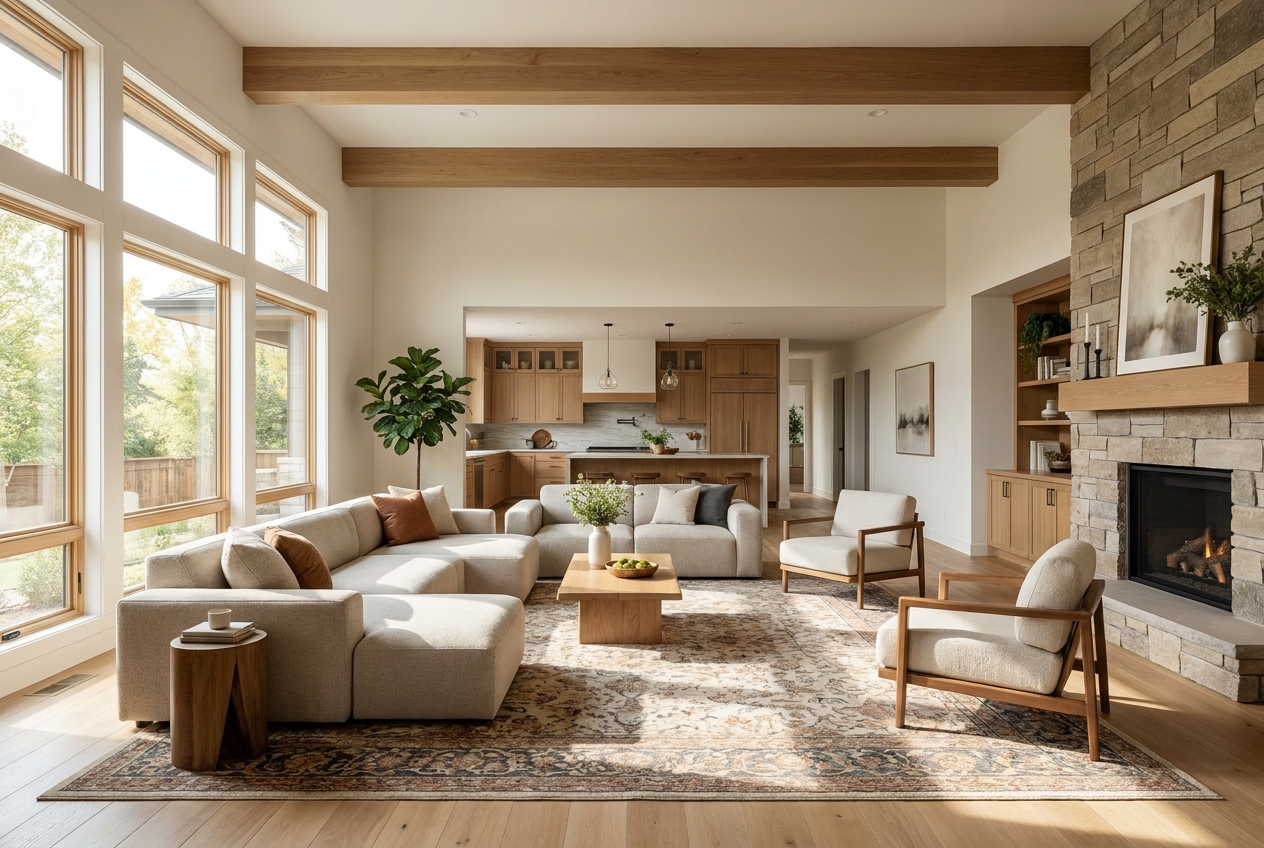
One of the most common missteps in compact spaces happens long before the furniture arrives at your home. A magnificent, deep-seated sectional might look perfectly proportioned under the soaring ceilings of a furniture warehouse, but once delivered, it dominates the room.
Suddenly, the piece pushes aggressively against every wall, dictates every pathway, and leaves absolutely no room for the space to breathe.
Understanding furniture scale is the first essential step in space-saving interior design. Scale dictates that pieces should invite graceful movement and foster visual calm, not stubbornly claim every available inch of floor space.
Researchers have studied spatial perception in interiors, noting that about 26% of the surface area was covered by furniture in normal conditions, compared to 41% in crowded environments.
When you prioritize pieces tailored to the room’s authentic dimensions, you immediately create better flow and cleaner sightlines.
This is where compact, multifunctional modular seating becomes the foundational design correction. Pieces that combine right-sized proportions with built-in utility allow your furniture to work twice as hard without demanding more real estate.
By selecting seating that respects the boundaries of the room, you naturally manufacture a sense of openness that square footage alone could never provide. The trick lies in finding pieces that anchor the space beautifully without overwhelming it.
When every square foot carries weight, seating that earns its place through both proportion and practicality becomes the room’s quiet anchor. The Home Reserve loveseat with built-in storage illustrates how compact seating can do more than fill a corner.
Its built-in storage and adaptable design make it a piece that the room can grow with over time. Implementing thoughtful small living room ideas means selecting furniture that serves as a canvas for your life, harmonizing with the room’s scale.
| Key Insight: Proportion is the secret to a spacious feel. When you choose furniture scaled to your room’s actual dimensions, you create visual breathing room that makes the entire space feel significantly larger than its footprint. |
2. Hide Clutter Before It Steals Calm
Clutter does not merely occupy physical space, as it also heavily occupies cognitive space. A visually busy room will reliably feel drastically smaller and inherently more stressful than its actual measurements suggest.
When the eye is forced to constantly process loose items like remotes and stray toys, the mind registers the environment as chaotic. In fact, clutter fills your mental workspace quickly, leaving little room to work on the problem at hand.
Embracing hidden storage furniture shifts storage from a purely practical chore to a core design philosophy. When a room’s organizational capacity is completely invisible, the room itself begins to breathe differently.
Clear surfaces allow the eye to travel smoothly across the space, letting the architectural lines emerge naturally. This subtle psychological shift is the secret to creating profoundly clutter-free interiors.
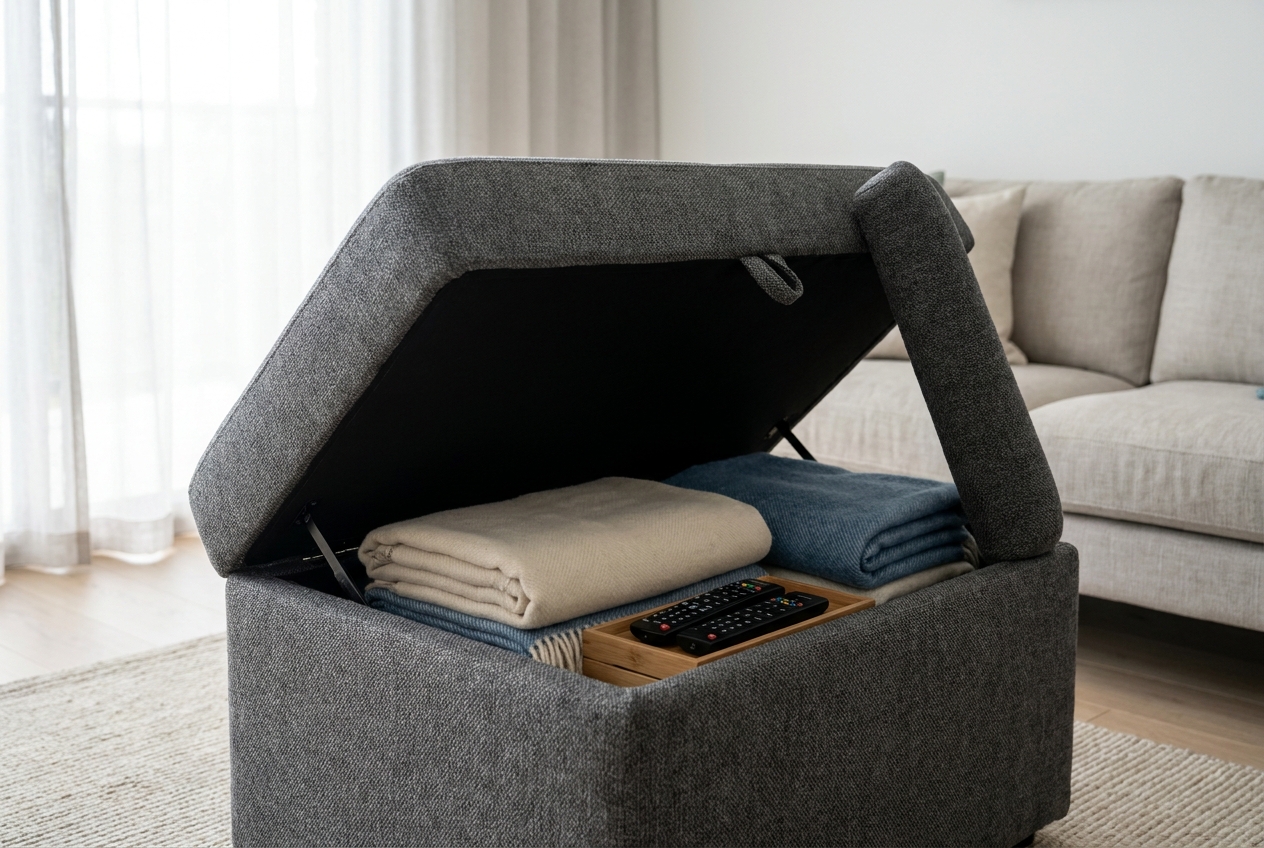
To achieve this, look toward double-duty investments that eliminate the need for secondary, floor-hogging storage units. Ottomans with deep, lift-top compartments and clever seating with under-cushion storage transform the way a room functions.
These living room storage solutions effortlessly swallow the daily detritus without adding a single bulky cabinet to the room’s footprint. Keeping surfaces clear also improves mental clarity, as the visual distraction of clutter can reduce working memory significantly.
Picture the ease of an ordinary Tuesday evening with a loveseat or small sectional. Thick winter blankets, a stack of current reading material, and the gaming controllers simply disappear under the seat cushions in seconds.
A tidy, beautifully composed room that takes only thirty seconds to reset is not an impossible dream. Hidden storage goes beyond solving a functional dilemma, fundamentally changing the emotional temperature of the space.
3. Design the Room to Move Fluidly
A small living room rarely has the luxury of serving just one master. On any given week, it is asked to perform as a focused homework zone, a comfortable movie night theater, and a makeshift guest space.
Sometimes, it must pivot through all of these roles in a single afternoon. When a room is forced into a rigid, unyielding layout, the space feels chaotic and permanently compromised.
The solution is adopting flexible seating zones as your primary spatial strategy. Instead of arranging a room around a single fixed point, design the layout so its function can shift naturally.
This fluid approach to space-saving interior design prevents you from having to drag heavy furniture across the floor. The layout should graciously accommodate the moment without causing unnecessary frustration.
This flexibility is perfectly achieved through the use of modular seating. Individual pieces can be easily clustered together for a cozy family movie night or spread apart to open up the floor.
They can even be reconfigured entirely when a move to a new apartment eventually happens. Modular pieces empower you to treat your furniture as a toolkit rather than a monument.
A highly effective visual trick in compact living is to intentionally float this furniture slightly away from the walls. While the instinct is often to push everything to the perimeter, doing so paradoxically emphasizes the room’s boundaries.
Floating pieces create distinct, intimate zones that feel purposeful and well-planned. Future-proofing your space with adaptable furniture ensures that as your needs evolve, the room simply evolves right alongside them.
| Pro Tip: Resist the urge to push every piece of furniture against the walls. Floating your seating just a few inches away creates an illusion of depth and makes the boundaries of the room disappear. |
4. Choose Fabrics That Work Very Hard
There is a beautifully chaotic truth to real life when managing a home. Coffee occasionally spills, muddy paws race excitedly indoors, and toddlers inevitably experiment with a stray crayon on the nearest soft surface.
The living room absorbs the full, heavy weight of your household’s daily activities. The fabric it wears will either confidently support that reality or constantly fight against it, causing endless anxiety.
Opting for washable upholstery should no longer be viewed as a practical concession. Selecting fabrics that can be cleaned without drama gives you genuine permission to live fully within your space.
It allows you to host weekend gatherings without hovering nervously over wine glasses. This mindset lets children and pets truly belong to the room rather than being restricted from it.
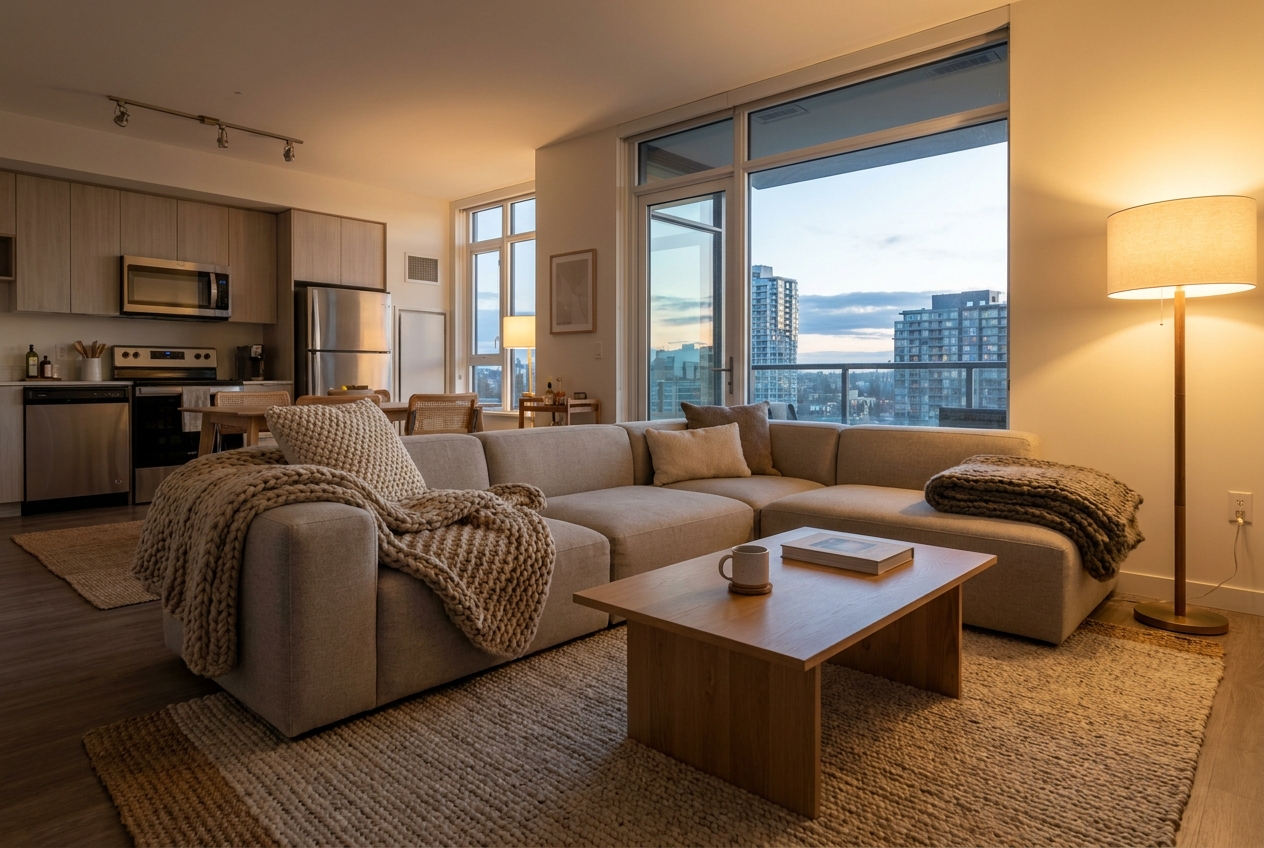
Beyond cleanability, texture serves as an incredibly powerful design tool specific to smaller layouts. When square footage restricts the number of objects you can place, you must build visual interest through layered textiles.
A nubby throw blanket, a woven linen pillow, and soft fabrics on your main seating add profound warmth. This layering ensures that curated small spaces feel inviting and intentional, rather than overly utilitarian.
Stain-resistant, easily washable covers represent a quality standard in modern furniture design. This feature is exceptionally relevant for those who want a composed home without the burden of constant maintenance.
Furthermore, the ability to simply swap or refresh these covers acts as a brilliant, sustainable strategy. A room that graciously handles the chaos of living while remaining beautiful is the ultimate luxury.
| Important: Never prioritize style over livability in a small space. Non-washable fabrics in high-traffic areas lead to constant anxiety. Choose high-quality, removable covers to ensure your sanctuary stays beautiful without the stress of permanent stains. |

The Bottom Line
To understand the profound impact of these seemingly simple adjustments, consider a young couple residing in a tight city apartment. For months, they felt their living room was quietly conspiring against them, perpetually cluttered with the overflow of daily life.
Rather than moving to a more expensive lease, they applied these four strategies in sequence. They swapped out a massive sofa for a gracefully scaled piece that instantly restored breathing room.
Next, they separated their seating into a flexible zone, angling pieces just away from the walls. This allowed the space to easily transition from a morning remote-work setup to an evening hosting space without heavy lifting.
Finally, they enveloped the room in soft, highly textured, machine-washable fabric covers that effortlessly survived the couple’s newly adopted cat. The physical dimensions of the room did not expand by a single inch, yet the atmosphere was completely transformed.
It is time to gently challenge the way we view limited square footage. A small living room is not an unfortunate limitation that you must simply endure or work around. Instead, it is a profound invitation toward intentionality where every single choice carries significant design meaning.
The quiet architecture of a room that feels twice its size relies entirely on respectful scale, invisible storage, intuitive flexibility, and hard-working fabric.
These space-saving interior design concepts weave together to establish an environment that naturally supports your lifestyle. With these curated small spaces strategies in place, the room feels entirely different now.
It is calmer, far more considered, and deeply personal. Begin with just one piece, one thoughtful change, or one easy trick to watch your living room tell a much better story.
| Author Profile: Home Reserve is the leading manufacturer of adaptable modular furniture for families seeking durable, sustainable solutions for everyday living. |
 Jodithina Krueger is the kind of writer who genuinely cannot publish something without checking it twice. Maybe three times. They came to real estate market trends through years of hands-on work rather than theory, which means the things they writes about — Real Estate Market Trends, Home Staging Techniques, Property Investment Strategies, among other areas — are things they has actually tested, questioned, and revised opinions on more than once.
That shows in the work. Jodithina's pieces tend to go a level deeper than most. Not in a way that becomes unreadable, but in a way that makes you realize you'd been missing something important. They has a habit of finding the detail that everybody else glosses over and making it the center of the story — which sounds simple, but takes a rare combination of curiosity and patience to pull off consistently. The writing never feels rushed. It feels like someone who sat with the subject long enough to actually understand it.
Outside of specific topics, what Jodithina cares about most is whether the reader walks away with something useful. Not impressed. Not entertained. Useful. That's a harder bar to clear than it sounds, and they clears it more often than not — which is why readers tend to remember Jodithina's articles long after they've forgotten the headline.
Jodithina Krueger is the kind of writer who genuinely cannot publish something without checking it twice. Maybe three times. They came to real estate market trends through years of hands-on work rather than theory, which means the things they writes about — Real Estate Market Trends, Home Staging Techniques, Property Investment Strategies, among other areas — are things they has actually tested, questioned, and revised opinions on more than once.
That shows in the work. Jodithina's pieces tend to go a level deeper than most. Not in a way that becomes unreadable, but in a way that makes you realize you'd been missing something important. They has a habit of finding the detail that everybody else glosses over and making it the center of the story — which sounds simple, but takes a rare combination of curiosity and patience to pull off consistently. The writing never feels rushed. It feels like someone who sat with the subject long enough to actually understand it.
Outside of specific topics, what Jodithina cares about most is whether the reader walks away with something useful. Not impressed. Not entertained. Useful. That's a harder bar to clear than it sounds, and they clears it more often than not — which is why readers tend to remember Jodithina's articles long after they've forgotten the headline.