
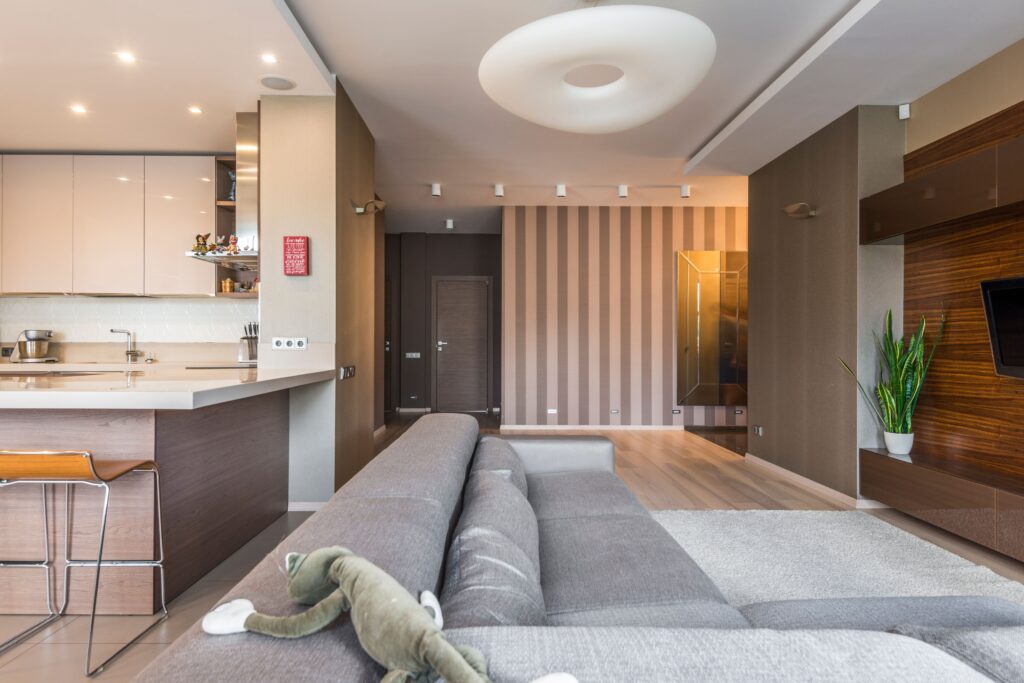
When you walk into a well-designed space, you can feel a change. The air feels different, and the sounds around you either fade away or take on a new quality. Your focus sharpens, yet you also become more aware of your surroundings. This experience is no accident; it comes from careful design that brings several senses together at once.
Immersive design has become a key part of hospitality, retail, entertainment, and digital spaces. Understanding how designers create these experiences reveals just how closely space and human behaviour are connected.
Layout, flow, and the architecture of attention
The way a room is arranged affects how people move, where they stop, and what catches their eye. This is often called the architecture of attention. Designers shape what people see, highlight key focal points, and use the rhythm of a space to guide movement naturally.
Hospitality designers often create compressed spaces that open into larger, more expansive areas. For example, a narrow hallway leading into a large atrium can create a powerful sense of arrival. The contrast between the two spaces makes each one feel more memorable.
Casino design is well known for influencing how people move through a space. Layouts are often designed to encourage exploration while subtly guiding visitors towards key areas.
These same design principles also extend into digital environments. For example, immersive live casinos are designed using similar ideas. They combine intuitive layouts, clear visual hierarchy, and real-time interaction to recreate many of the qualities found in physical casinos. In every case, the goal is to create an experience that feels intuitive, keeps people focused, and encourages ongoing engagement.
The role of lighting in setting the scene
Lighting is one of the most powerful tools available to designers. It influences how people feel in a space, often before they consciously notice it. Warm, soft lighting creates a sense of comfort and welcome, while bright, cool lighting encourages alertness and energy.
In hotels and restaurants, lighting is often layered to create depth and flexibility. Ambient lighting establishes the overall mood, task lighting supports specific activities, and accent lighting draws attention to architectural details or focal points. Together, these layers reduce visual fatigue while giving a space greater depth and variety.
Museum designers use lighting with exceptional precision. In institutions such as the Louvre and the National Gallery, carefully positioned lighting helps minimise glare while drawing attention to individual works of art. Rather than simply displaying exhibits, the lighting helps guide visitors naturally through each gallery.
Entertainment venues often take this a step further with dynamic lighting systems that respond to the audience, the performance, or the time of day. The result is an environment that feels like an active part of the experience rather than just a backdrop.
Colour, texture, and the psychology of space
Almost every commercial space relies on colour theory. Designers choose colours to influence emotion, establish pace, and reinforce a brand’s identity. Reds often create excitement and urgency, while blues and greens encourage a sense of calm. Neutral tones allow architectural features, furnishings, and displays to stand out more clearly.
Texture adds another layer to the experience. Smooth marble conveys luxury, exposed brick introduces warmth and authenticity, and soft acoustic panels both improve sound quality and create a gentler visual atmosphere.
Retail designers apply these principles deliberately. Research suggests that thoughtful use of colour and texture can encourage shoppers to spend more time in a store and positively influence purchasing behaviour. Together, these elements quietly communicate quality while making the environment more inviting.
Sound as a structural design element
Sound is often treated as an afterthought, but leading designers consider it a structural element of the overall experience. Acoustic engineering plays a significant role in shaping how a space feels, often before visitors consciously notice individual sounds. Even a visually stunning room can feel uncomfortable if its acoustics create excessive noise or echo.
In immersive installations and experiential venues, sound design receives the same level of attention as lighting. Spatial audio systems allow designers to direct sound into specific zones, creating distinct sonic environments within a shared space without overwhelming visitors.
Restaurants also use sound strategically. The tempo of background music can subtly influence the pace of dining. Research has found that slower music may encourage diners to stay longer and, in some settings, spend more. Much of this influence occurs below conscious awareness, demonstrating how subtle environmental cues can shape behaviour.
Digital environments and the new frontier of immersion
The principles of immersive design are not limited to physical spaces. Digital product designers rely on many of the same concepts to create engaging online experiences. User interface design, sound feedback, animation, transitions, and colour choices work together to build a cohesive sensory environment.
Immersive digital experiences are becoming increasingly common across gaming, streaming platforms, and interactive websites. Motion graphics, ambient audio, and high-quality visuals combine to make users feel like active participants rather than passive observers.
Research into immersive experience design suggests that multisensory engagement can strengthen emotional connection, improve memory retention, and encourage repeat engagement. These principles apply just as effectively to digital environments as they do to museums, hotels, and other physical spaces.
Why immersive design matters more than ever
Capturing people’s attention has become increasingly challenging. Designers across every industry are responding by creating environments that engage multiple senses and encourage meaningful interaction.
The most successful immersive spaces do not demand attention. Instead, they make it feel natural. Whether the environment is physical or digital, the same principles remain at work. Light, sound, colour, texture, layout, and flow come together to create experiences that people not only notice but remember.
 Scotty Cregerons writes the kind of buying and selling guides content that people actually send to each other. Not because it's flashy or controversial, but because it's the sort of thing where you read it and immediately think of three people who need to see it. Scotty has a talent for identifying the questions that a lot of people have but haven't quite figured out how to articulate yet — and then answering them properly.
They covers a lot of ground: Buying and Selling Guides, Real Estate Market Trends, Expert Insights, and plenty of adjacent territory that doesn't always get treated with the same seriousness. The consistency across all of it is a certain kind of respect for the reader. Scotty doesn't assume people are stupid, and they doesn't assume they know everything either. They writes for someone who is genuinely trying to figure something out — because that's usually who's actually reading. That assumption shapes everything from how they structures an explanation to how much background they includes before getting to the point.
Beyond the practical stuff, there's something in Scotty's writing that reflects a real investment in the subject — not performed enthusiasm, but the kind of sustained interest that produces insight over time. They has been paying attention to buying and selling guides long enough that they notices things a more casual observer would miss. That depth shows up in the work in ways that are hard to fake.
Scotty Cregerons writes the kind of buying and selling guides content that people actually send to each other. Not because it's flashy or controversial, but because it's the sort of thing where you read it and immediately think of three people who need to see it. Scotty has a talent for identifying the questions that a lot of people have but haven't quite figured out how to articulate yet — and then answering them properly.
They covers a lot of ground: Buying and Selling Guides, Real Estate Market Trends, Expert Insights, and plenty of adjacent territory that doesn't always get treated with the same seriousness. The consistency across all of it is a certain kind of respect for the reader. Scotty doesn't assume people are stupid, and they doesn't assume they know everything either. They writes for someone who is genuinely trying to figure something out — because that's usually who's actually reading. That assumption shapes everything from how they structures an explanation to how much background they includes before getting to the point.
Beyond the practical stuff, there's something in Scotty's writing that reflects a real investment in the subject — not performed enthusiasm, but the kind of sustained interest that produces insight over time. They has been paying attention to buying and selling guides long enough that they notices things a more casual observer would miss. That depth shows up in the work in ways that are hard to fake.